Your target market defines the test plan, which is why we settle the market question at brief stage. Europe works to the EN 71 series; the United States works to ASTM F963 together with CPSIA requirements. The two systems serve the same purpose but part ways on five points.
Legal basis and the conformity document
The first difference is the legal basis: in Europe, EN 71 operates as a harmonised standard under toy safety legislation and the product carries the CE mark; in the United States, ASTM F963 is a standard made mandatory by CPSIA. The second difference is the document: Europe requires a declaration of conformity backed by a technical file, while the United States requires a Children's Product Certificate (CPC) backed by test reports.
Test scope and laboratory requirements
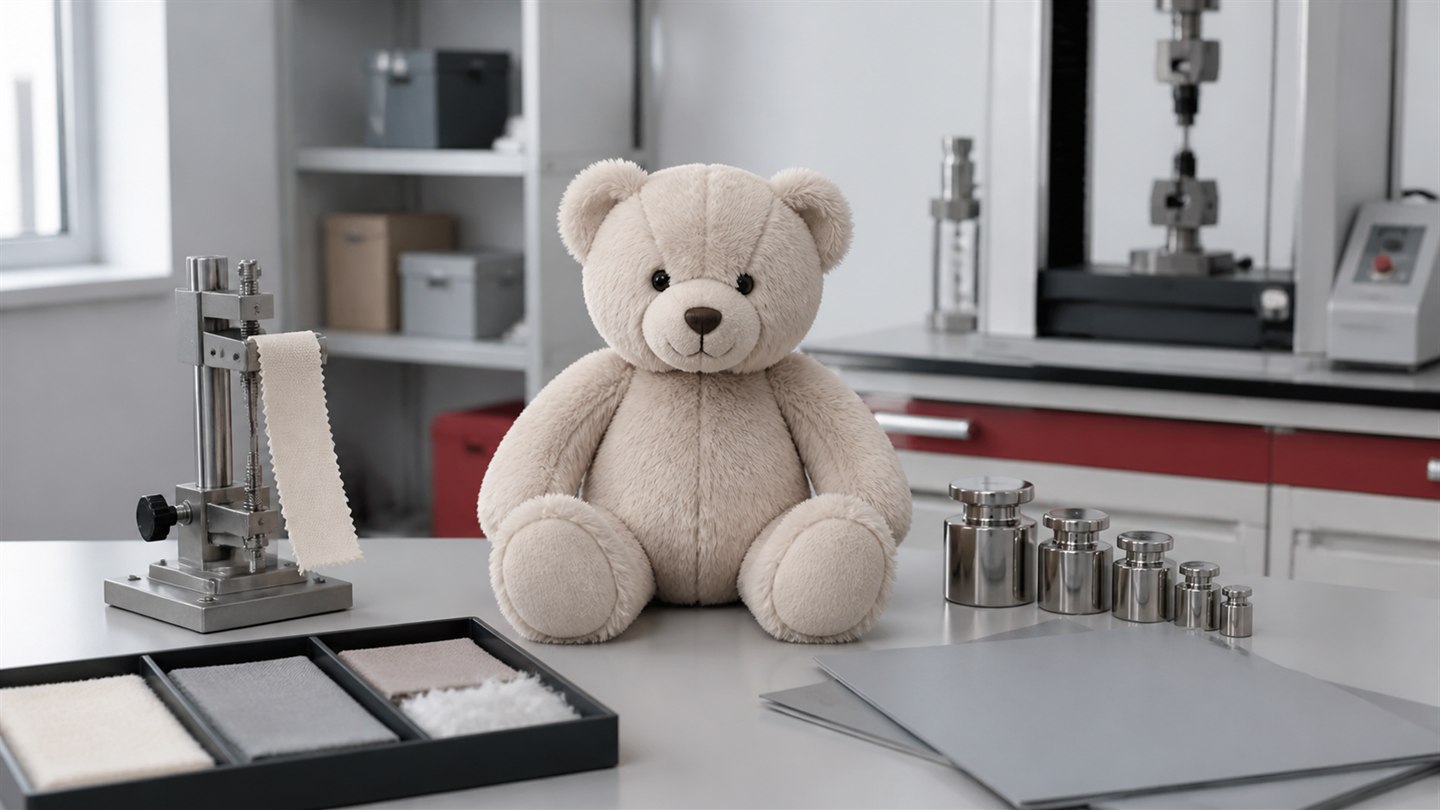
The third difference is scope. EN 71-1/2/3 covers mechanical and physical properties, flammability and migration of certain elements; ASTM F963 covers comparable headings, and CPSIA sets separate limits for lead and phthalates. The fourth difference is who tests: the United States makes third-party laboratory testing mandatory for children's products, and for European projects we work with accredited laboratory reports as well.
Labelling and traceability
The fifth difference is labelling. Europe requires the CE mark, manufacturer or importer details and age warnings; the United States requires a permanent tracking label showing batch, date and production location, along with age grading and small-parts warnings. These elements shape where the woven label, care label and hangtag go, so we add the label files to the tech pack before PPS approval.
Laboratory samples, traceability labels and the technical file go into the order plan from the start according to target market, so compliance becomes part of the production schedule rather than an afterthought.
YOUR NEXT STEP
See how this applies to your own project
Send us your character, target market and quantities, and our team assesses how this topic applies to your project and replies in writing.